How to Become a Truly Advanced Medical Translator: Skills, Training, and Mindset
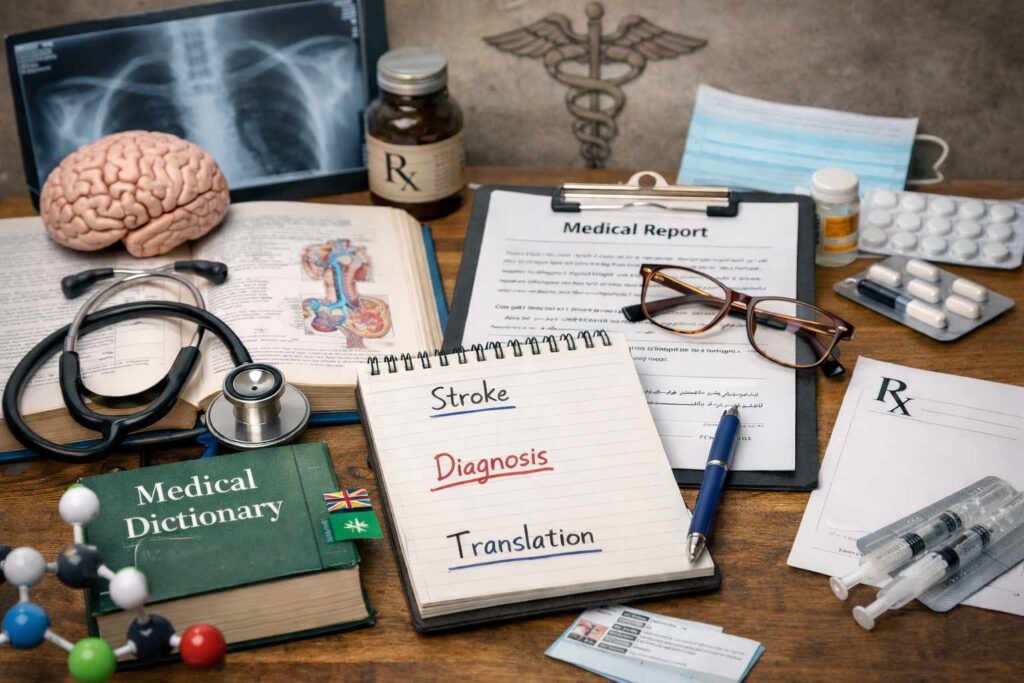
Medical translation isn’t just another specialization you casually add to your CV. It’s one of the few areas where language, science, ethics, and responsibility collide. A single mistranslated term can confuse a diagnosis, invalidate consent, or even put a patient at risk. That’s why becoming a truly advanced medical translator requires a different mindset altogether.
This isn’t about memorizing long Latin terms. It’s about learning how medicine thinks—and learning how to carry that thinking accurately across languages.
Think like a clinician, translate like a professional
Advanced medical translators don’t translate words; they translate clinical reasoning. To do that, you need a working understanding of how the human body functions, how diseases develop, and how healthcare professionals communicate.
You don’t need to become a doctor, but you do need to understand anatomy and physiology system by system, recognize common pathologies, and know how tests, imaging, and treatments fit together. When a report mentions symptoms followed by investigations and conclusions, you should instantly recognize the logic behind it—not just the vocabulary.
This kind of understanding changes everything. Suddenly, texts stop feeling dense or intimidating. They become structured, predictable, and readable.
Medical bilingualism is more than terminology
One of the biggest mistakes translators make is assuming that knowing medical terms in two languages is enough. It isn’t.
Medical English is highly standardized, cautious, and shaped by legal liability. Medical Arabic, on the other hand, often varies widely in register, sometimes leaning toward literal translations, archaic phrasing, or mixed registers depending on the source.
An advanced medical translator knows when not to mirror the source text. Your job isn’t to preserve awkward phrasing—it’s to produce a target text that sounds like it was written by a healthcare professional in that language. That often means normalizing, clarifying, and restructuring without distorting meaning.
Master document types, not just “medicine”
At an advanced level, you don’t translate “medical texts.” You translate specific medical genres.
A radiology report doesn’t sound like a discharge summary. A consent form doesn’t read like a patient information leaflet. A medico-legal report follows an entirely different logic again.
Each document type has its own tone, level of precision, and risk profile. Knowing these conventions—and applying them consistently—is what makes agencies and institutions trust you with high-stakes work.
Terminology management is non-negotiable
If you’re relying on memory alone, you’ll hit a ceiling fast.
Advanced medical translators build and maintain their own terminology databases. They track preferred equivalents, context-specific variants, regional usage, and notes about false friends or risky terms. Over time, this becomes a personal asset far more valuable than any dictionary.
It also protects you. When terminology choices are documented and justified, consistency and confidence follow.
Ethics and risk awareness separate experts from amateurs
Medical translation lives in an ethical space. You must understand informed consent, patient safety, and the legal implications of wording choices. Sometimes clarity matters more than elegance. Sometimes you must resist the urge to simplify. And sometimes you must flag ambiguities instead of guessing.
This awareness is especially critical in mental health, migration-related medical files, and medico-legal contexts—areas where language can directly affect outcomes.
Real progress only comes from real material
There’s no shortcut here. Advanced skill comes from repeated exposure to authentic medical documents and disciplined self-review.
A strong habit is simple but powerful: translate real medical texts regularly, revisit them after a day, revise critically, and compare your output to native medical writing. Over time, patterns emerge—both in the texts and in your own mistakes. That’s where growth happens.
Credentials matter—but only the right ones
Not all certificates carry equal weight. What matters are credentials that involve assessment, specialization, and professional recognition. Broad, generic “medical terminology” courses may help at the beginning, but they won’t take you far.
What really builds credibility is demonstrated competence, targeted CPD, and recognized certification paired with real-world experience.
Specialization is where mastery lives
The best medical translators don’t translate everything. They specialize.
Mental health, oncology, clinical trials, refugee health, public health—each of these areas has its own language ecosystem. Specializing sharpens your instincts, improves accuracy, and increases professional value.
Depth beats breadth every time.
From translator to trusted consultant
At the highest level, medical translators stop being passive language workers. They become consultants.
They flag unclear source texts. They suggest standard phrasing. They understand the consequences of wording choices. And they help clients reduce risk while protecting patients.
That’s the level institutions look for—and pay for.