Fun Ways to Practice English/Arabic Without Textbooks
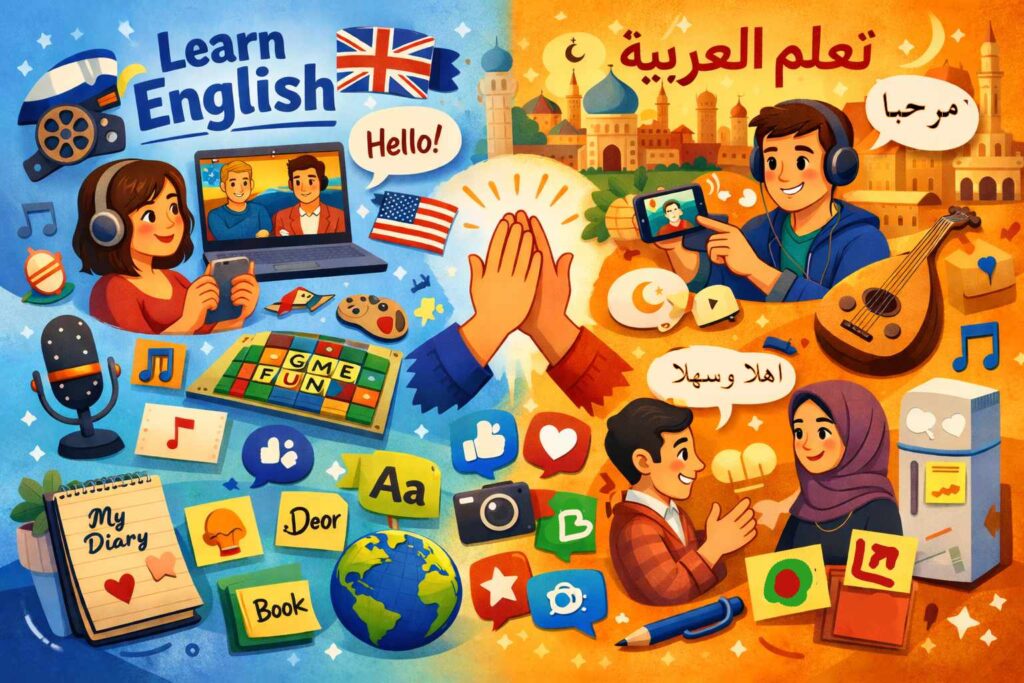
Learning a language doesn’t have to be about heavy textbooks, endless grammar drills, or boring vocabulary lists. In fact, some of the best language skills come from immersing yourself in real-life situations and playful exercises that make the learning process enjoyable. Whether you’re practicing English or Arabic, there are countless ways to build your skills naturally and have fun at the same time.
1. Dive Into Movies, TV Shows, and YouTube Videos
Watching content in your target language is like giving your brain a mini-immersion every day. For English learners, sitcoms, vlogs, or even animated shows can be incredibly helpful because they use everyday vocabulary and casual conversation. Arabic learners can try popular series, news clips, or YouTube channels in different dialects to hear authentic speech. Try watching with subtitles first, then without, and repeat phrases you like to practice pronunciation.
2. Play Language Games
Language learning games are not just for kids—they are a fantastic way to memorize words, practice sentence structures, and even learn slang. Simple games like word association, Pictionary, or even charades in English or Arabic can sharpen your vocabulary and listening skills. Online apps like Duolingo or Quizlet also turn language practice into a fun challenge rather than a chore.
3. Speak With a Language Partner
Nothing beats talking to a real person. Find a language exchange partner—someone who wants to learn your native language while you practice theirs. You can chat about hobbies, daily life, or even role-play scenarios like ordering food or asking for directions. Speaking regularly helps you gain confidence, reduces fear of mistakes, and introduces you to natural expressions you won’t find in textbooks.
4. Sing Along With Music
Songs are magical tools for language learners. Listening to and singing along with English or Arabic songs can improve your pronunciation, rhythm, and listening skills. Try writing down the lyrics as you sing and notice any new vocabulary or idioms. Music makes learning memorable because melodies stick in your mind long after you’ve listened.
5. Label Your Environment
A low-tech, high-impact method is labeling things around your house in your target language. Write sticky notes on your fridge, computer, or furniture in English or Arabic. Every time you see them, say the word out loud. Over time, this reinforces vocabulary without even feeling like studying.
6. Tell Stories or Keep a Diary
Expressing yourself in your target language is a great way to build fluency. Try keeping a short diary, narrating your day, or even telling a story in English or Arabic. You don’t need perfect grammar—what matters is communicating your thoughts. This practice strengthens both your writing and thinking skills in the language.
7. Use Social Media Creatively
Social media is not just for scrolling—it’s a treasure trove for language practice. Follow creators who post in your target language, comment on posts, or join language-specific groups. Writing short, casual messages in English or Arabic gives you practice in real-world contexts and keeps you engaged daily.
Conclusion
Language learning doesn’t have to be boring. By weaving fun, interactive activities into your daily life, you’ll improve your skills naturally and enjoy the journey. The more playful and immersive the experience, the faster you’ll notice progress—and the more you’ll actually want to keep going.