Beyond Words: How Remote vs. On-Site Interpreting Shapes Clinical Outcomes

Healthcare interpreting has evolved rapidly in recent years. What was once almost exclusively conducted face-to-face is now frequently delivered through video platforms or telephone lines. Hospitals, clinics, and community health services increasingly rely on remote interpreting to bridge language gaps quickly and efficiently. While the core goal remains the same — accurate communication between clinician and patient — the medium fundamentally shapes how that communication unfolds.
Understanding the strengths and limitations of both remote and on-site interpreting helps clinicians, patients, and interpreters choose the most appropriate modality for each situation.
The Value of On-Site Interpreting
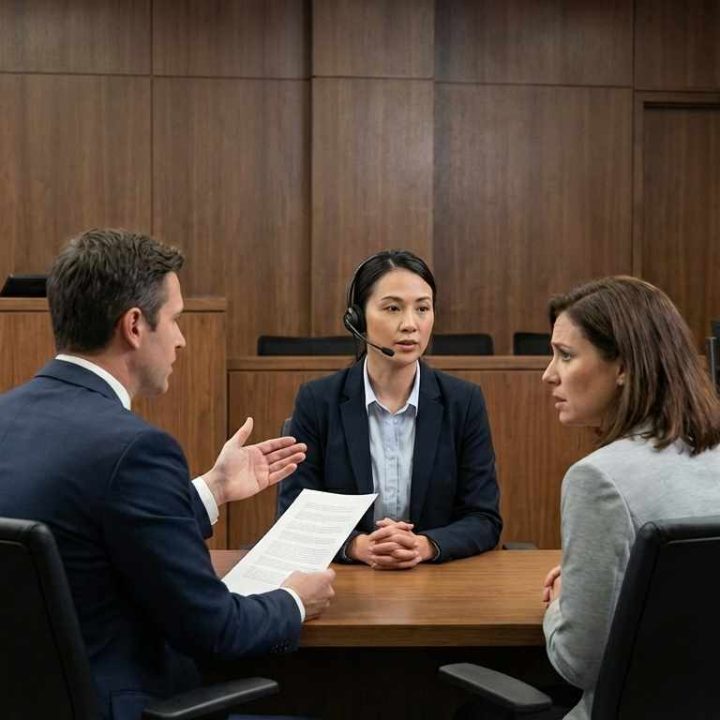
When an interpreter is physically present in the room, communication feels more natural and grounded. Body language, facial expressions, and subtle emotional cues are fully visible, allowing the interpreter to convey tone and nuance with greater accuracy. This presence can be especially important during sensitive conversations such as mental health assessments, end-of-life discussions, or complex diagnoses.
In face-to-face settings, interpreters can also observe environmental factors affecting communication. For example, they may notice that a patient is struggling to hear due to background noise, appears confused by a document, or is seeking reassurance through eye contact. These cues can be essential to ensuring the message is both understood and respectfully delivered.
However, on-site interpreting requires scheduling, travel time, and availability, which may delay urgent care or increase costs for healthcare providers.
The Rise of Remote Interpreting
Remote interpreting — via video or telephone — offers immediate access to language support, particularly in emergencies or rural settings where in-person interpreters may not be available. Telehealth expansion has further normalized remote communication, making it a practical solution for routine appointments, follow-ups, and triage consultations.
Video interpreting preserves some visual communication, allowing participants to observe facial expressions and gestures. Telephone interpreting, while lacking visual cues, provides rapid access and can be critical in urgent or time-sensitive situations.
For patients in regional areas or those requiring rare language combinations, remote interpreting can mean the difference between receiving care promptly and facing significant delays.
How Communication Changes on Video
Video interpreting creates a hybrid environment that blends elements of in-person and remote communication. Visual cues remain visible, but eye contact may feel indirect due to camera positioning. Participants may unintentionally speak over one another because subtle conversational signals are harder to perceive on screen.
Technical factors also influence communication quality. Poor internet connectivity, audio lag, or low-resolution video can disrupt the flow of conversation and increase cognitive load for all parties involved. Interpreters often need to manage turn-taking more actively to maintain clarity.
Despite these challenges, video platforms support visual demonstrations, document sharing, and clearer emotional communication compared to telephone interpreting.
Communication Without Visual Cues: Telephone Interpreting
Telephone interpreting removes visual information entirely, requiring interpreters to rely solely on tone, pace, and verbal content. This can make it more difficult to detect confusion, emotional distress, or nonverbal hesitation.
For example, a long silence during an in-person consultation might signal confusion, embarrassment, or cognitive difficulty. On the phone, silence may instead be mistaken for a dropped connection or disengagement. Interpreters must therefore confirm understanding more frequently and clearly manage conversational flow.
Telephone interpreting works well for brief, straightforward exchanges such as appointment scheduling, medication instructions, or administrative inquiries. For complex or emotionally sensitive discussions, the absence of visual context can limit communication depth.
Patient Comfort and Trust
Patient comfort varies across modalities. Some patients feel more at ease with an interpreter physically present, particularly older individuals unfamiliar with technology. Others appreciate the privacy remote interpreting can provide, especially in small communities where anonymity is valued.
A patient discussing mental health concerns may feel less exposed speaking through a screen, while another may find reassurance in the human presence of an interpreter seated nearby. Cultural expectations, age, and prior exposure to technology all shape these preferences.
Practical Considerations for Interpreters
Remote interpreting requires additional skills beyond language proficiency. Interpreters must manage audio delays, ensure clear turn-taking, and adapt voice projection and pacing for clarity over digital channels. They may need to intervene politely when speakers talk over one another or when sound quality interferes with comprehension.
In contrast, on-site interpreting demands spatial awareness, professional positioning, and the ability to manage group dynamics within the room. Both modalities require preparation, adaptability, and strong communication management.
Choosing the Right Modality
No single approach suits every healthcare interaction. Emergency departments may rely on telephone interpreting for immediate access, while mental health assessments often benefit from on-site or video interpreting where emotional nuance is critical. Follow-up appointments, medication reviews, and routine check-ins may be effectively handled remotely.
The most effective choice balances urgency, complexity, patient comfort, and the need for visual communication.
Communication Beyond the Medium
Whether delivered in person, via video, or over the phone, effective interpreting depends on clarity, neutrality, and respect. The interpreter’s role remains constant: to ensure that meaning is conveyed accurately and that the patient’s voice is heard without distortion.
Technology may change the channel of communication, but the human need for understanding remains the same. In healthcare settings, where words influence decisions, trust, and wellbeing, choosing the right interpreting modality can significantly shape patient outcomes and experiences.