Do Arabic Stamps and Handwritten Notes Need Translation?
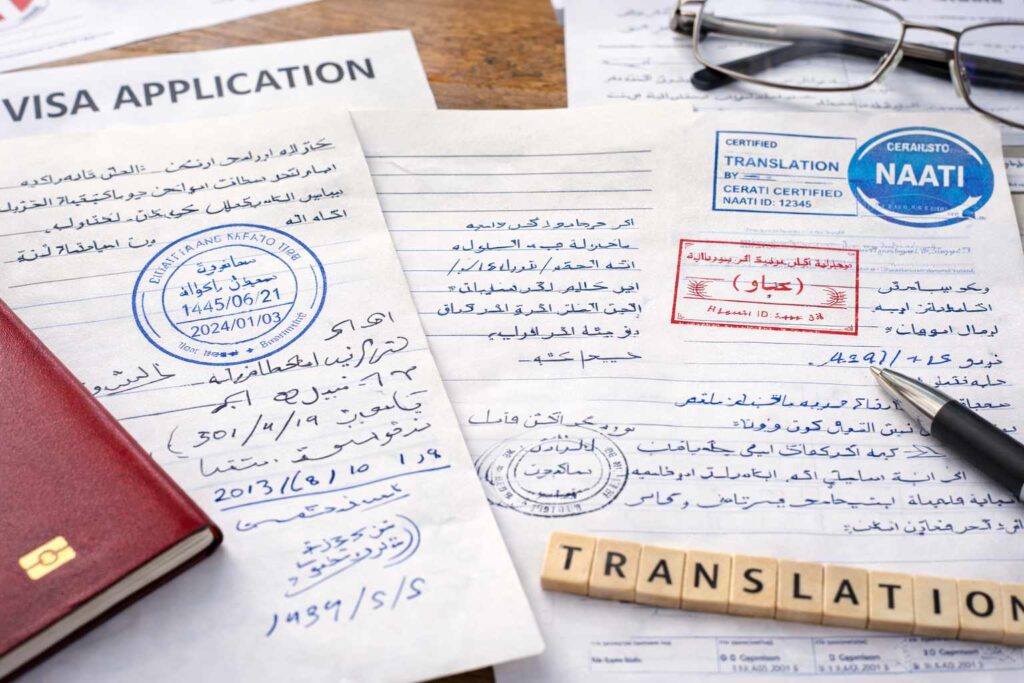
When preparing documents for an Australian visa, many applicants focus on official certificates like birth, marriage, or academic records. But what about the smaller, less obvious details — Arabic stamps, handwritten notes, or annotations on your documents? Do these need translation too? The short answer is: usually, yes.
Australian immigration authorities require that all content on documents submitted in a language other than English must be understandable to the case officer reviewing your application. This isn’t limited to typed text — it includes stamps, seals, handwritten notes, comments, and even signatures if they contain text. Anything that could provide context or affect the interpretation of your documents should be translated.
Why stamps and notes matter
Sometimes a document may seem straightforward at first glance — like a school transcript or a legal certificate — but Arabic stamps or handwritten annotations can hold essential information:
-
Dates or expiry information
-
Official verification or approval marks
-
Signatures that include titles or notes
-
Legal clarifications, such as “certified copy” or “copy for personal use”
If these details are not translated, immigration officers might misinterpret your documents, which can delay your application or even trigger requests for resubmission.
How to translate stamps and handwritten notes
Translating stamps and handwritten notes isn’t just about converting words. A NAATI-certified translator ensures that:
-
The original formatting is preserved where possible
-
Any important dates, numbers, and official marks are clearly explained
-
Notes that may affect interpretation are fully captured in English
Often, translators will include a certification statement that clarifies exactly what was translated, ensuring that Home Affairs understands the content exactly as it appears in the original document.
Practical tips for applicants
-
Review every page carefully: Even small stamps or scribbles could be relevant.
-
Provide clear scans or photos: Translators need legible copies to ensure accuracy.
-
Don’t rely on partial translation: Leaving notes untranslated can cause delays.
-
Use a certified translator: NAATI-certified translators in Australia are the safest choice, especially for visa applications.
Conclusion
While stamps and handwritten notes might seem minor, they can carry significant legal or procedural meaning. Translating them correctly ensures your visa application is complete, professional, and less likely to face delays.
If you have documents in Arabic with stamps, handwritten notes, or annotations, working with a NAATI-certified translator ensures that every detail is captured accurately, giving your application the best chance of smooth processing.
For professional Arabic–English NAATI-certified translations for your Australian visa, you can learn more at andytranslations.com.