How to Stay Up-to-Date in Translation Technology and CAT Tools in 2026
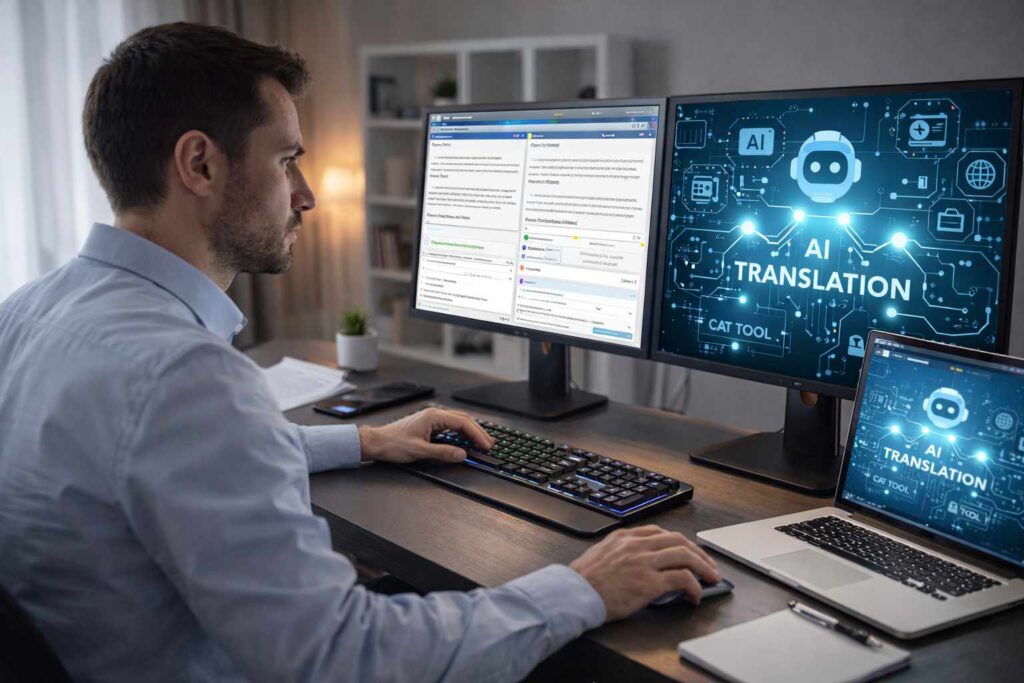
Translation technology is evolving faster than ever. What was considered advanced just a few years ago — basic CAT tools, translation memories, and terminology databases — is now the baseline. In 2026, professional translators are expected not only to use technology competently, but to understand its limits, its risks, and its strategic value.
Staying up-to-date is no longer optional. It directly affects productivity, quality, income, and long-term relevance in the profession.
Technology Is No Longer Just a “Tool”
One of the biggest mindset shifts translators need to make is understanding that technology is no longer something you simply “use.” CAT tools, machine translation engines, quality assurance software, and workflow platforms actively shape how translation work is produced, reviewed, and delivered.
Modern CAT environments integrate translation memories, AI-powered suggestions, terminology management, and automated QA checks in real time. A translator who does not keep up risks working slower, missing errors, or appearing outdated to agencies and institutional clients who expect fluency in these systems.
CAT Tools Are Becoming Ecosystems
In 2026, CAT tools are no longer standalone programs. They function as ecosystems connected to cloud platforms, client portals, and project management systems. Translators who limit themselves to basic functions — segment-by-segment translation and simple TM use — are underutilising powerful features that save time and reduce cognitive load.
Understanding how to customise workflows, manage multiple TMs, apply filters, and interpret QA reports allows translators to work more efficiently without sacrificing accuracy. Mastery is less about learning more tools and more about learning deeper use of the tools you already have.
Machine Translation Literacy Is Essential
Machine translation is now embedded in almost every professional translation environment. The key issue is no longer whether to use MT, but how to use it responsibly and strategically.
Translators in 2026 need strong MT literacy: knowing when MT adds value, when it introduces risk, and how to post-edit efficiently without blindly trusting output. This is especially critical in legal, medical, and government translation, where subtle errors can have serious consequences.
Staying current means following developments in neural MT, understanding domain adaptation, and recognising common MT failure patterns in your language pair.
Continuous Learning Beats One-Time Training
A common mistake is assuming that one CAT tool course or webinar is enough. Translation technology evolves continuously through updates, new features, and shifting industry standards. Translators who thrive treat learning as an ongoing habit rather than a one-off investment.
This doesn’t require constant formal training. Reading release notes, following tool developers, participating in professional forums, and testing new features on small projects all contribute to staying current without becoming overwhelmed.
Technology Should Support, Not Replace, Expertise
Another trap is becoming overly tool-focused while neglecting linguistic and subject-matter expertise. Technology is most powerful when paired with deep language competence, domain knowledge, and professional judgment.
Clients and agencies still value translators who can identify inconsistencies, question source texts, and understand institutional or legal contexts — things no tool can fully automate. Staying up-to-date in technology should strengthen your professional identity, not dilute it.
Choosing What Not to Learn
With the explosion of tools, platforms, and AI solutions, discernment is crucial. Not every new technology is relevant to every translator. The most effective professionals are selective: they focus on tools that align with their specialisations, client base, and long-term goals.
In 2026, staying current doesn’t mean chasing every trend. It means understanding the direction of the industry and positioning yourself intelligently within it.
Closing Remarks
Translation technology will continue to evolve, but the core challenge remains the same: balancing efficiency with quality, speed with accuracy, and automation with responsibility.
Translators who stay curious, adaptable, and critically engaged with technology will not only survive these changes — they will shape the future of the profession.